Monday, June 18, 2012

Dinner | PUBLIC

I must have passed by PUBLIC so many times over the last five years, quietly saying to myself that I need to get my butt over there and see what it's all about. Luckily for me, Ariana asked if I'd ever been there before and was wondering if I'd accompany her for dinner one night. My answer? I was totally game, as I'd finally be able to say that I've been there and eaten there! :)


PUBLIC is located on an unassuming quiet block of Elizabeth Street in Nolita behind a mosiac of different kinds of red brick.

The entrance full of plants at PUBLIC.

AvroKO is the team behind the design, concept, and branding of PUBLIC, which was their first self-propelled project. In fact, the restaurant group to which PUBLIC belongs is called AvroKO Hospitality Group (all related, of course). The space and décor is inspired by the civic institutions of the 1930s and 1940s, "upon which could be depended for the greater good," as it highlights "the beauty of elements culled from post offices, libraries, and civic buildings." As such, PUBLIC "embodies AvroKO's desire to make quality food a common commodity, thus all things municipal inform the architecture, materials, and graphics. What's more is that AvroKO was awarded two James Beard awards -- "Best Restaurant Design" and "Best Restaurant Graphics" -- for PUBLIC in 2004.

So for those design-savvy and design-cognizant individuals out there, PUBLIC is intoxicating with very well-executed décor and ambiance. You might initially think that you would be overloaded by the "civic" theme and the resulting details (every nook and cranny of the restaurant embraces such), but it uncannily works quite harmoniously as a whole.

Upon entering, I came across these gorgeous, bronze vintage post office mailboxes. As it turns out, PUBLIC has a quirky little "Wine Mailbox" program which brings its limited members a bottle of wine every month in his/her very own PUBLIC bronze mailbox. How fun is that idea?! Sign me up, please!

No. 2 seemingly "Dixon-Ticonderoga" pencils inhabit the host/hostess area -- definitely in light with the "civic-ness" going on around here!

Old craft/home/worksmanship magazines line the entrance to the coat room, along with little clipboards (more on this later).

On the other side of the coat room are book shelves lined with library-styled books of many non-fiction genres. Beneath are card catalogs (be still my heart!) that line the bottom portion of the wall.

I snuck a little shot of one of the dining rooms -- love the soft ambient lighting done in here.

A peek from the rear of the restaurant, looking into one of the private dining areas of the restaurant.

The other dining area that opens out into the street somewhat and has an overall airy feel to it.

View of the vibrant bar area that appears to be housed inside a loft/warehouse looking space. I love the exposed greyscale brick and the angled mirror above the fitted wine bottle shelves.

Orbed oil lamps are affixed along the brick wall, creating a soft glow over the dining area.

I arrived a little early, so I got cocktail to start -- Pimm’s Lychee Tea with Pimm's No. 1 (a liquer made with dry gin, liqueur, fruit juices and spices), lychees, Rooibos iced tea (a red tea), and lemon. A very tropical/summery cocktail with a kick of tartness to back it up. Definitely a cocktail to savor for a good while.

Once we were seated, we were each given the miniature clipboard menus which emulate a ledger of some sort (whether it's an order form or public record-related). It certainly fit right into the theme once again, making the visual experience that more complex.

A Pittsburgh native, Chef Brad Farmerie heads the kitchen at PUBLIC. Developing a love for food at an early age, he explored the cuisines and wines of Europe, North Africa, the Middle East and Southeast Asia during a brief college hiatus, which later brought him to study at Le Cordon Bleu in the UK and to graduate in 1996. Upon graduation, he worked in many acclaimed restaurants in Europe, including Coast, Chez Nico, and Le Manoir aux Quat' Saisons. Most influential to his own style of cuisine was his experience working with Chef Peter Gordon at the Sugar Club, The Providores, and Tapa Room. Seven years later, Chef Farmerie returned back to the States "to help conceive PUBLIC, AvroKO's first self-propelled restaurant," where he could explore his creative, global approach even further, a cuisine which he refers to as "free-spirted fusion."

We were given some rosemary lemon focaccia bread -- so soft and flavorful.

To start, we shared the cured wild boar with Garrotxa cheese, olives, caper berries and crostini. Cut a little thicker than prosciutto di Parma (almost as thick as bacon), the cured wild boar went perfectly with the toasted slices of crostini -- salty, crunchy, and savory. It was a great dish to start off with, just catching up. The olives were lovely too, and the cheese was on the stronger end of the spectrum.

As my main course, I had the braised lamb shoulder with maple rutabaga purée, fregola sarda, and smoked almond granola. I don't think I've had lamb shoulder prior to this, but it was so delicious. As with most well-braised meats, it fell apart so easily and loosely with lots of soaked up flavors. It had the same texture as braised short ribs, only with that familiarly subtle gamy lamb taste (which I happen to love). The fregola sarda (i.e., Sardinian pearls of pasta) was great -- just like the kidn of pearly couscous I would normally have with lamb. I gobbled up every bite of this dish, wishing for a few bites more. I was very impressed with its simplicity and its lovely flavor profile.

Ariana had the mushroom and ricotta tortellini with Tuscan kale, creamy fennel and a black garlic purée. As we're both mushroom lovers, this was quite the hearty pasta dish with mushrooms as its main ingredient focus. The accompanying details (kale, fennel and black garlic) enhanced the earthiness of this dish further, creating a pleasant blends of tastes on the palate. Considering it was a vegetarian tortellini, it was still very filling and hearty.

For dessert, Ariana and I shared the white chocolate lavender ice cream with fresh strawberries and marcona almond brittle. It was the ice cream flavor that drew us in, and we were so thankful we decided to order it. The ice cream was really light and subtly fragrant (sweet from the chocolate, herby from the lavender), bringing us back to each of our childhoods of being outdoors, carefree and light-hearted. The tartness from the strawberries and the salty crunch from the almond brittle just brought it all home for us. Great, great dessert by pastry chef, Ellen Mirsky at PUBLIC.

Findings: Ariana and I had the best time at PUBLIC, as its eclectic cuisine and design-savvy ambiance really resonated with our senses in so many aspects. The team behind PUBLIC put just as much hard work, dedication, and commitment in the kitchen as it does with the aesthetics of the restaurant's beautiful, multi-dimensional space. Many times, restaurants succeed only in one of the two areas and not both, so it was definitely refreshing to see that PUBLIC could deliver both quite well (another such restaurant that fits this exception is The NoMad). I was very impressed with the caliber of cuisine being delivered from the kitchen, so I would love to go back to try the other items on the a la carte menu and perhaps also for the tasting menu. Plus, its wine mailbox program sounds so awesome and fun!

Anyway, it's nice to know that I have another restaurant to add to my list of solid go-to's -- believe it or not, those are hard to come by! Thanks for checking it out with me, Ari! :)

Price point: $12 for each cocktail, 11 for the starter, $24-28 for each main course, $9 for dessert.

--June 7, 2012

PUBLIC
210 Elizabeth Street
New York, NY 10012

Friday, June 15, 2012

Book Signing | Kelley Lilien

I have been an avid follower of Mrs. Kelley Lilien's blog, Mrs. Lilien Styling House, for the last couple years, falling in love with her impeccable taste and style as well as her adventures as a stylist/designer/bon vivant! Her new book, Mrs. Lilien's Cocktail Swatchbook, was released at the end of May, and I had already preordered my very own copy. Once she announced her (swatch)book tour would be stopping in New York City (at Jonathan Adler's eponymous shop in SoHo, I couldn't contain my excitement! I would be able to meet her and have her pen my copy of the swatchbook, so I invited Jess to come along for the fun!

Jonathan Adler's quirky little shop always finds a way to brighten my day -- the bold colors, whimsical fanfare, and amusing accessories never cease to make me super giddy. Mrs. Lilien couldn't have picked a better spot to host her book launch in this very fine city -- it has her name written all over it. Plus it helps that she and Mr. Adler are quite good friends!

Little treats were spread out and housed in Mr. Adler's array of fantastic homewares.

The (swatch)book signing table, decked out with flowers, books, treats, and Sharpies, of course!

A glimpse of Mrs. Lilien mingling with her book launch/cocktail party guests!

Caught a gratuitous shot of Mr. Adler and Mrs. Lilien posing for their fans! Too adorable! :)

Our cocktails at the party!

Mrs. Lilien preparing to sign (swatch)books!

View from the entrance of the store and of the attendees.

Mrs. Lilien signing my copy of Mrs. Lilien's Cocktail Swatchbook!

A little look at the dynamic little cocktail swatchbook. Mrs. Lilien "takes a fanciful approach to cocktail-making in this retro-chick swatchbook" which takes inspiration of those good ol' Pantone swatchbooks for paint color (it also reminds me of those childhood relics of mine -- the Brain Quest multi-grade trivia packs). The swatchbook includes 20 recipes for blended cocktails, 20 recipes for shaken cocktails, and 10 recipes for punch bowls. "Every classic recipe is accompanied with a modern twist and chic accoutrements" which can be perused by simply fanning out the swatches that have printed on them color photographs, detailed instructions, and tips.

This is the recipe for the cocktail that was served that evening at her book launch party -- the New-Schooler Wine Cooler, which consists of Chardonnay, raspberries, limes, simple syrup, and sparkling lemon-lime water. Simple, refreshing, and so delicious! Perfect party punch! :)

My signed copy of Mrs. Lilien's Cocktail Swatchbook -- "Bottoms up, Stefie!" Love her signature -- those cutely illustrated lips are the spot-on alternative to "xoxo" for sure!

Findings: Jess and I had a lovely time mingling at the book launch as well as finally meeting Mrs. Kelley Lilien herself! The affair was very well catered -- cocktails and snacks inside Jonathan Adler's gorgeous shop of whimsy can never be a bad idea! It was also nice to see one of her large-scale party cocktail recipes put into action to accommodate all of the attendees. The colorful design and the meticulous, visual recipes make for quite a uniquely dynamic go-to cocktail book. I can't wait to use it for any future parties/events/occasions coming up! And of course, finally meeting the ultimate bon vivant herself was such a lovely treat as well -- she was so friendly, warm, welcoming, and so very enthusiastic that it was contagious! No wonder she's the hostess of all hostesses and one extraordinary designer -- all of these winning character traits were churned into the wisdom that's behind each of these cocktail swatches.

For only $14.99, this will be a no-nonsense gift for any hostess, lady, bon viveur, foodie, and all related individuals in your lives!

Price point: $14.99 for each book.

--June 14, 2012

Jonathan Adler
47 Greene Street
New York, NY 10013

Mrs. Lilien's Cocktail Swatchbook
Kelley Lilien
available here on Amazon.com

Thursday, June 14, 2012

Food for Thought | Daniel Humm


“We only cook with copper pots and pans. We didn't need them, but I wanted to make a statement that we are a serious restaurant. When you own a nice bicycle, you ride different, push harder. With copper pots, you want to cook a little better. That ‘little’ is all there is between a good restaurant and a great one.”
--Daniel Humm
from "The Juicy Quote" in Bon Appétit, May 2012.

Wednesday, June 13, 2012

Foodie Film | Jiro Dreams of Sushi

After an interesting dinner at Sushi Azabu, Lisa and I headed over to the West Village to the International Film Channel (IFC) Center to finally see the film we'd been talking about for the last couple months -- Jiro Dreams of Sushi.

We had heard so many wonderful things about this -- through Gilt Taste, The New York Times, and NPR at first, and waves throughout the foodie universe thereafter. Watching the trailer alone is magical, enticing, and delicious -- you couldn't help but be curious as to what the documentary was all about.


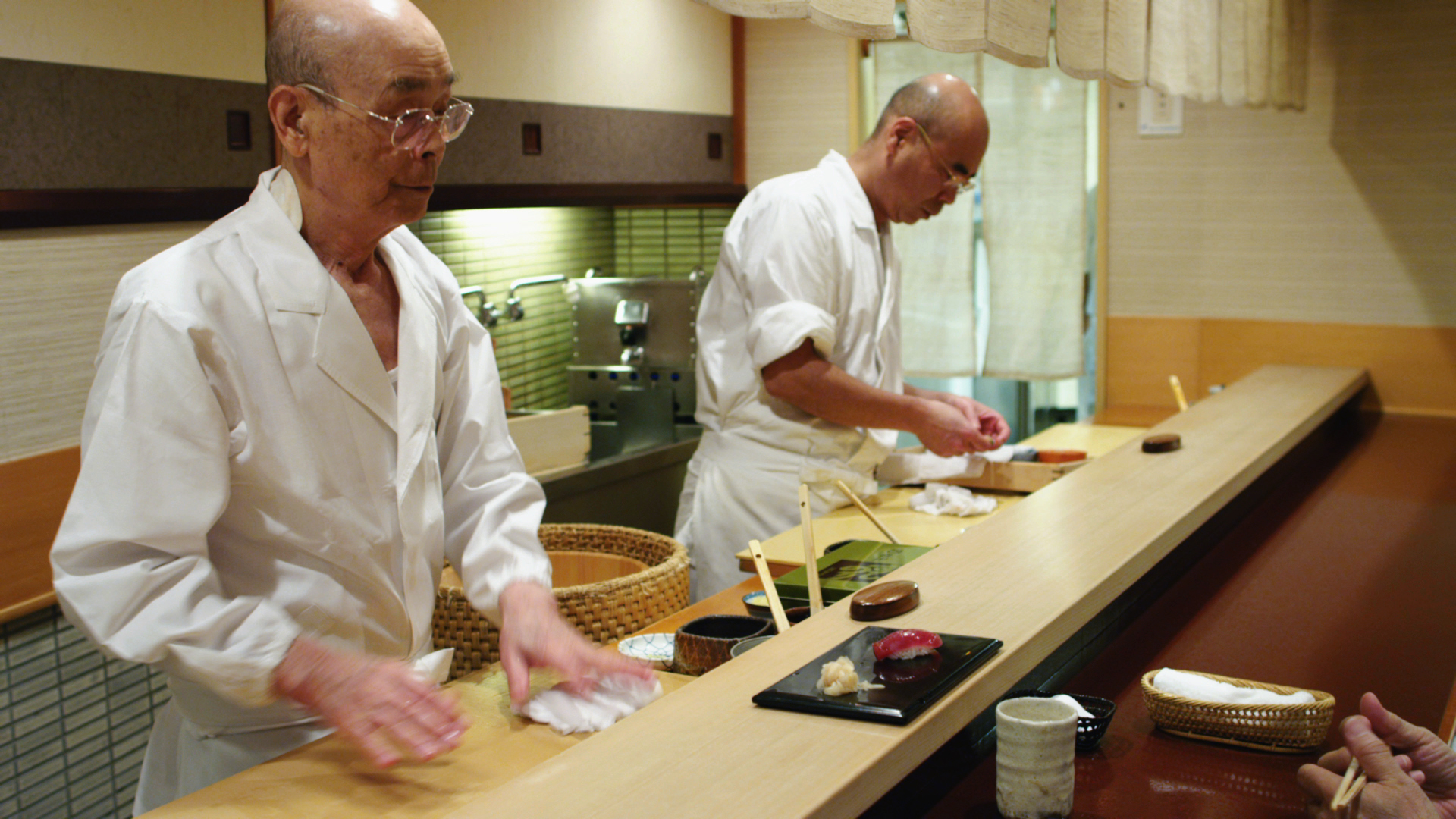
The documentary tells the story of an 85-year-old sushi chef (well, not just any sushi chef), Jiro Ono, who is the proprietor of Sukiyabashi Jiro, a ten-seat, sushi-only restaurant located inside a Tokyo subway station. "Despite its humble appearances, it is the first restaurant of its kind to be awarded a prestigious three-star Michelin review, and sushi lovers from around the globe make the repeated pilgrimage, calling months in advance and shelling out top dollar for a coveted seat at Jiro's sushi bar." The experience is rumored to outweigh its hefty cost -- so if you ever find yourself seated at Sukiyabashi Jiro, it'll be the most you'll ever spend for a meal under a half hour (i.e., eighteen or so pieces of nigiri sushi in 20-25 minutes for a whopping prix fixe price of 30,000 ¥ -- about $275). It's certainly a quick-paced marathon.

Jiro has been working most of his life, and he doesn't plan on stopping anytime soon. Throughout this time, he has been "mastering the art of making sushi, but even at his age, he sees himself still striving for perfection, working from sunrise to well beyond sunset to taste every piece of fish; meticulously train his employees; and carefully mold and finesse the impeccable presentation of each sushi creation." It is even said that among "a delegation of revered sushi chefs" that Jiro is the clear lead, who they claim, with no hesitation, has "mastered rice."

The documentary, directed by David Gelb, begins by introducing Jiro and his famed restaurant, going into the sushi chef's process in preparation and execution.

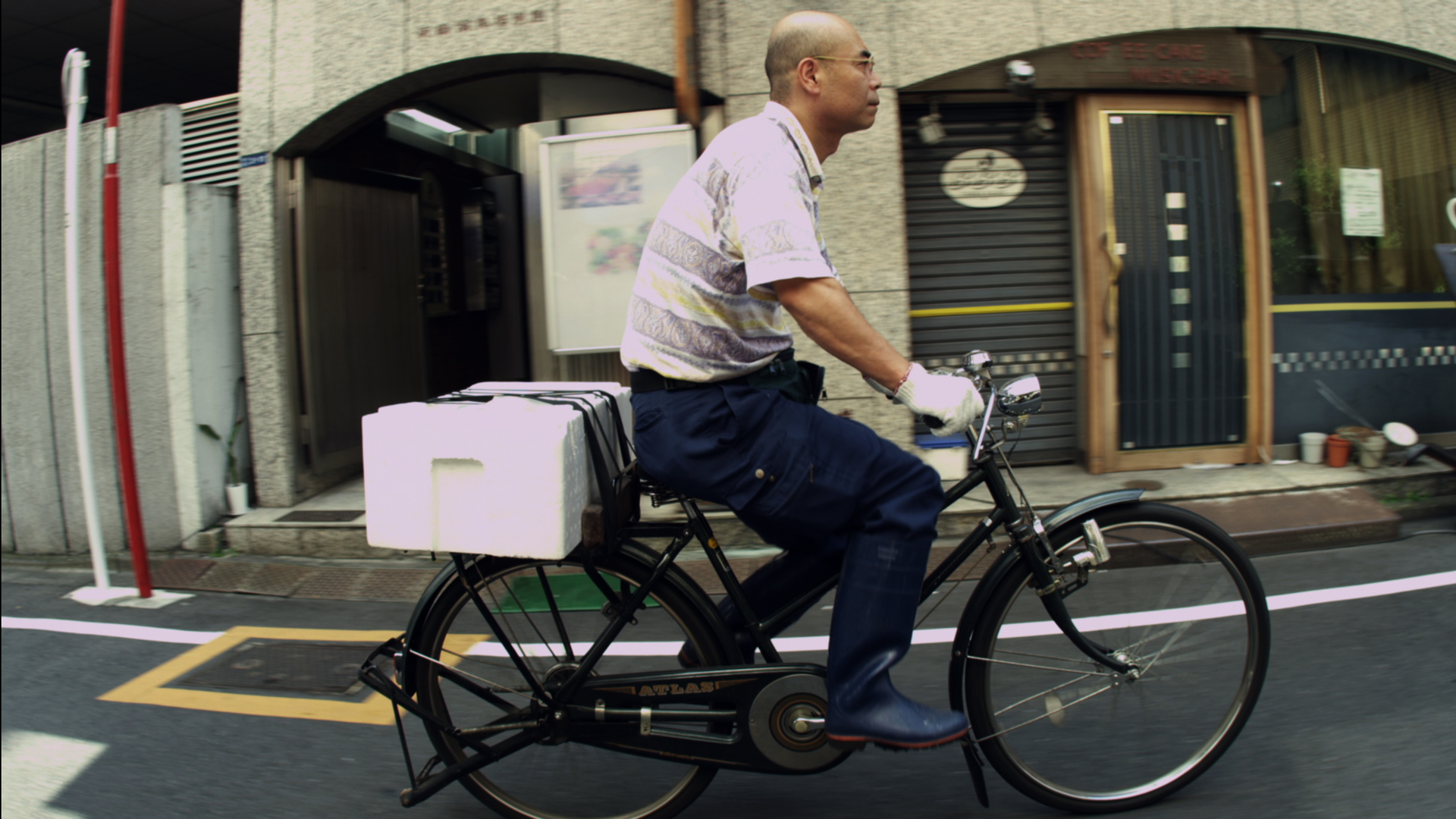
The camera took you to the Tsukiji Market, where each morning, Jiro's eldest son, Yoshikazu, visits to check out and shop the daily catch for the restaurant's next day or two.

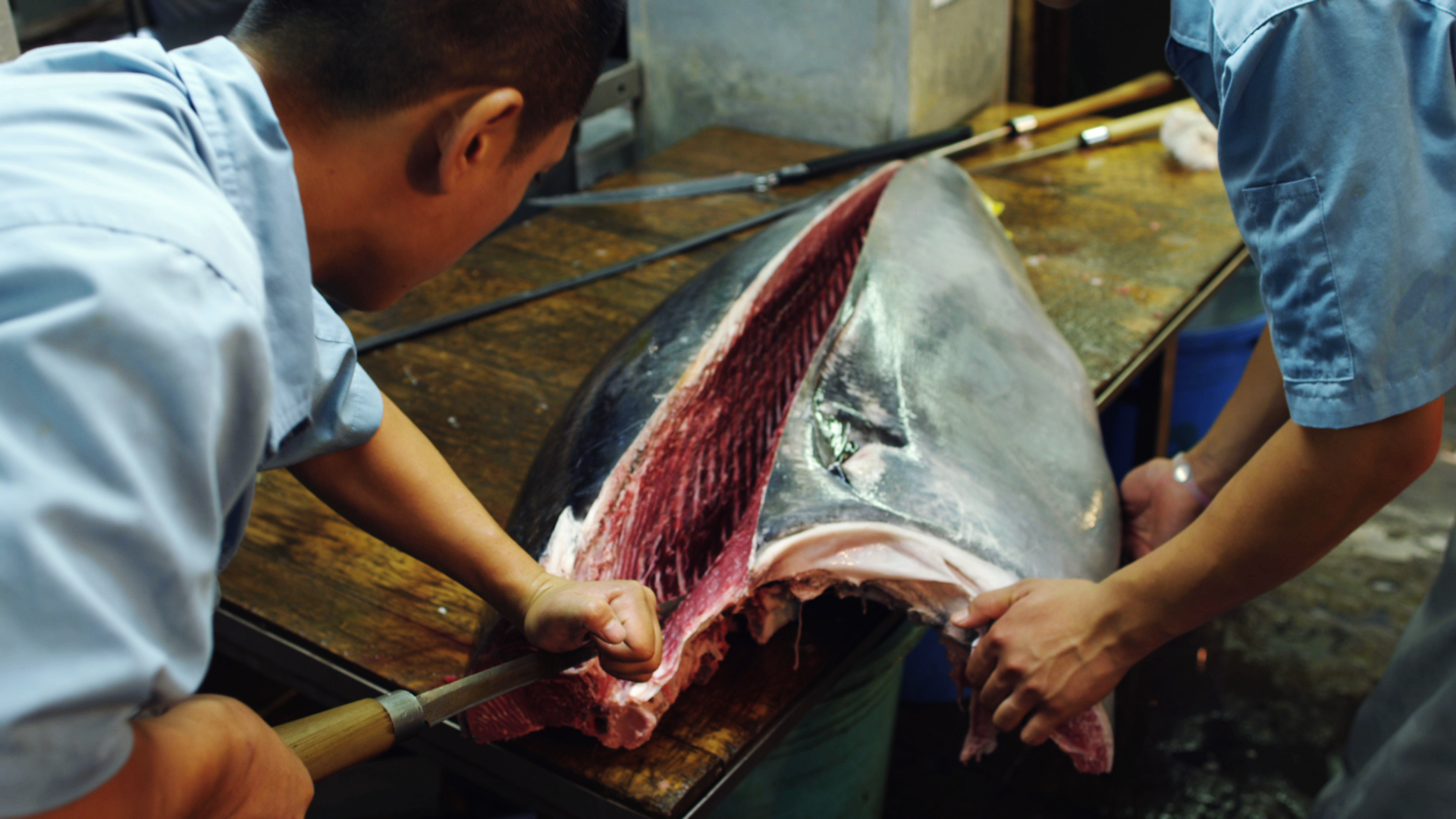
The most striking is the intense tuna auction to buy all cuts of Bluefin tuna. The auction is another art form in and of itself.

The documentary also details the relationship that Jiro has with Yoshikazu, "the worthy heir to Jiro's legacy, who is unable to live up to his full potential in his father's shadow" -- he's 50 years old now and remains the father's right hand man. It is tradition in Japan that the eldest son take over the family's business (in this case, Jiro's restaurant). On the other hand, Jiro's younger son, Takashi, opened a restaurant of his own, the sister to Jiro's restaurant, Sukiyabashi Jiro Roppongi (as it is located in Roppongi Hills, Tokyo) that has two Michelin stars and emulates a more casual atmosphere.

Also featured in the film was Masuhiro Yamamoto, a famed food critic in Japan, who is Jiro's biggest fan. He does a lot of the story telling, sharing his observations with the revered sushi chef.

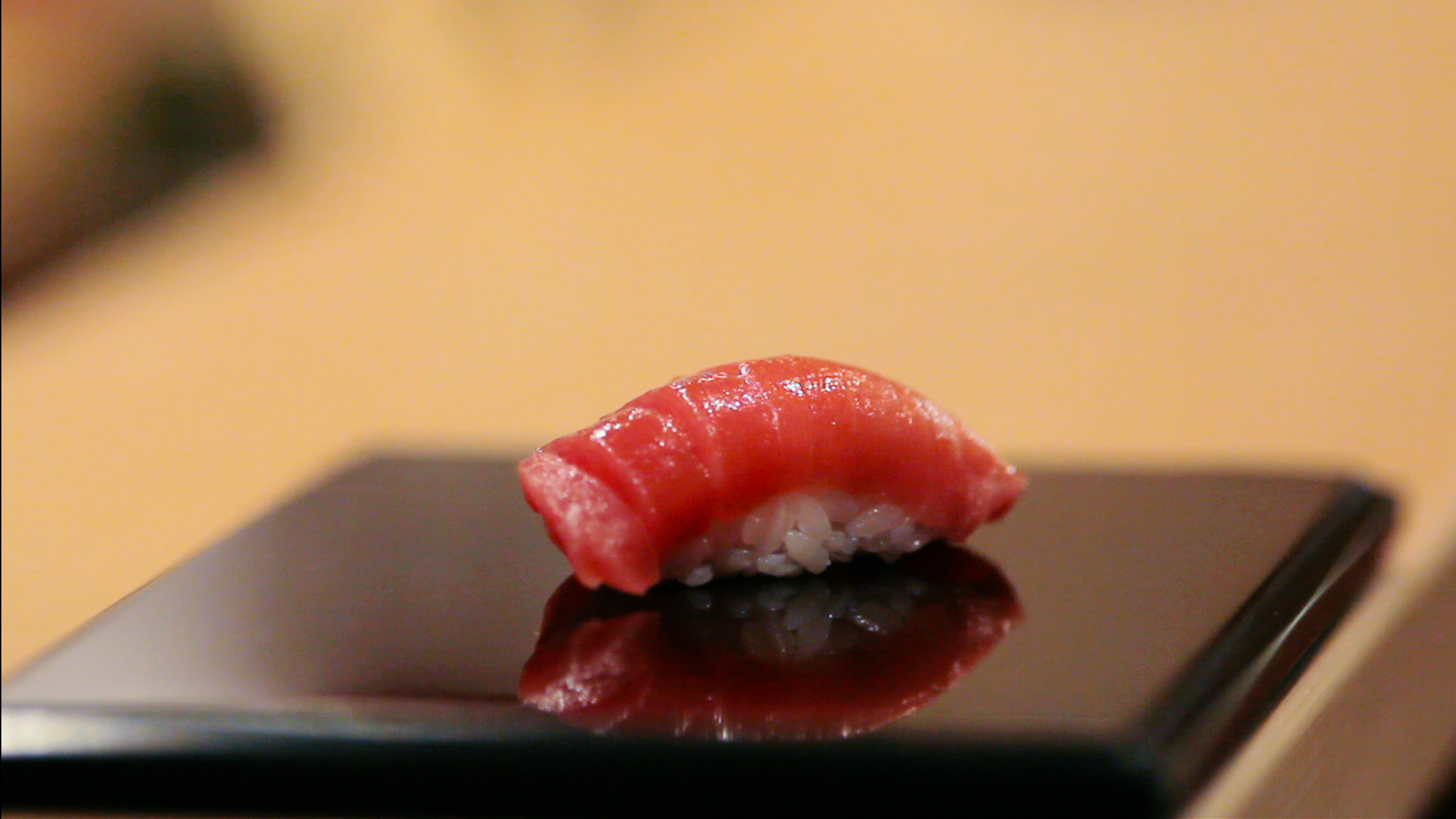
A piece of o-toro -- fatty tuna -- created by Chef Jiro Ono. The progression of the film as well as a meal at Sukiyabashi Jiro paralleled themselves to an orchestra's performance -- it was quite extraordinary to watch the build-up of these progressive things within the hour and a half that we were seated in the theatre. Even the soundtrack was beautifully done -- all classical masterpieces just like each crafted piece of sushi. More specifically, Mr. Yamamato outright says he views Jiro’s sushi meal "as a concerto with specific movements, or even as an illustration (and dramatization) of a specific philosophy."

Another thing to note is that Mr. Yamamato, among other diners at Sukiyabashi Jiro, shared that every time he dines at the sushi bar (i.e., the first time and all subsequent times), he is always tense and nervous, which he speculates is because he's before the great sushi master of Jiro Ono himself. I find that really awesome that a chef can have a profound effect on such a noteworthy food critic as Mr. Yamamato.

Some of my favorite quotes from the documentary:
  • Jiro: "You have to fall in love with your work. You must dedicate your life to mastering your skill. That is the key to happiness."
  • (from where the title of the film comes) Jiro: "I would make sushi in my dreams -- I would jump out of bed at night with ideas."
  • Jiro (still obsessed with sushi-making): “If I stopped working at 85, I would be bored out of my mind."
  • Mr. Yamamoto: "I’ve never seen a chef be so hard on himself."
  • Mr. Yamamoto: "The only difference between Jiro now and forty years ago is that he no longer smokes."
  • Jiro: "Even at my age, after decades of work, I don’t feel I have achieved perfection. But I feel ecstatic all day."

Findings: Ultimately, this film that "chronicles Jiro’s life as both an unparalleled success in the culinary world, and a loving yet complicated father" is very inspiring both through its salivation-causing imagery and its embracing mantras. As the camera reels through each morsel of sushi, the result is simply delicious, and if you came to the cinema before a meal, expect to leave incredibly hungry. The tone of the film is honest yet light-hearted, especially with the pleasant classical music that haunts its musical score. Even as the dialogue is entirely in Japanese and communicated to the audience through subtitles, Mr. Gelb and his team were able to capture the humor, expressions, and art so very beautifully. You're definitely in for a treat with this film -- I loved it so much that I've already pre-ordered the Blu-ray disc for its release in July!

So I implore you to see this immediately -- definitely worth the time and admission! :)

Price point: $13 admission per adult.

--June 2, 2012

International Film Channel Center
323 Avenue of the Americas
New York, NY 10014

Jiro Dreams of Sushi
Magnolia Pictures
limited release on March 9, 2012

Tuesday, June 12, 2012

Chef's Tasting | Sushi Azabu

So before I start this dining review, I wanted to preface it with a little change I'm making to my posts from now on. I was given some enlightening advice from Alice a few months back, after having a conversation on ways to improve one's blog. One of the things that she admires in a great blog are ones with solid photographs (no surprise given her expertise as a freelance photographer!), including not only basic things like composition and lighting, but also size. She pointed out an important thing that she commits to doing at Lingered Upon, her own blog, is including photographs with a greater resolution, so that her readers can enjoy the content at more ease. Anyways, I decided to take that advice to heart (thanks, Alice!), so the photographs at Four Tines will be appear a little bit larger now, so please enjoy!

A couple weekends ago, Lisa and I finally decided to check out Sushi Azabu over in Tribeca, housed inside one of our favorite spots, Greenwich Grill -- a bistro specializing in, believe it or not, Japanese-Italian fused cuisine. We made it an evening date of a "dinner and a movie" where we planned to go to the Independent Film Channel Center right after dinner to see the documentary, Jiro Dreams of Sushi (more on this later!).

I arrived a little early, so I waited at the bar, admiring the inspired décor of Greenwich Grill -- exposed brick, burgundy-upholstered curved banquettes, warm lighting, and large canvases of Japanese art and calligraphy sprawled on the walls.

I began the evening with the summer punch -- a concoction of vodka, peach, pineapple, orange juice and Prosecco. Lucky for me (and unfortunately for the rest of the evening's guests), it was the last one available from the bar. It was refreshing and deliciously fruity -- just the right balance of spirit and juice.

Loving the lamp placed in the corner here -- very Restoration Hardware-esque.

After Sushi Azabu had garnered some additional press after receiving one Michelin star over the past couple years, it piqued our interest to see if it is really worth that acclaim. Given how much we love Greenwich Grill, our expectations were pretty high already. The photographs from Snap Food's write-up on the sushi restaurant furthered this curiosity of ours.

Sushi Azabu is a small "sushi den" housed in the basement below Greenwich Grill, which served traditional edo-mae style sushi alongside small Japanese dishes. Edo-mae sushi style is dictated by traditional-minded techniques, such as the temperature of the rice, the fish, and the way it is served and eaten by the customers. About 70-80% of the sushi bar's offerings are imported directly from Japan, about four times per week. The rice is a unique blend of sushi rice imported directly from Japan, while the soy sauce is made in house -- i.e., sweetened and reduced Nikiri soy sauce that is infused overnight with mirin, kelp, and dried bonito shavings.

All of the sushi chefs that stand behind the bar are Japanese and were trained in Japan. Additionally, Sushi Azabu sits "atop a bed of smooth river stones with bamboo and a wood-lined ceiling and red walls made of traditional paper imported from Japan."

Even the chopsticks have been meticulously chosen -- handmade and imported from Ichihara Heibei craftsmen in Kyoto, a chopstick producer established over two centuries ago.

Lisa began with a lychee martini -- puréed lychee fruits and vodka. The lychee was delicious, but the vodka made it quite the strong cocktail.

To get the optimal culinary experience at Sushi Azabu, Lisa and I opted for the chef's omakase whereby the sushi chefs serve the highlights of the menu along with other things that are only offered via omakase.

The omakase began with a few pieces of pickled celery -- just a bitingly refreshing start to our meal.

Next came the Pacific oysters from Washington state with soy sauce and scallions, served raw on a half-shell. Slightly chilly, these little suckers smoothly slipped down our throats. They were really fresh, and given my affinity for oysters from the West Coast (and of course, Lisa's overall intense penchant for these bivalves), we really enjoyed this. The soy sauce and scallion mixture was basically a Japanese-style hogwash that provided a little more structured flavor to the oysters.

The third round consisted of a sashimi sampler of four different kinds of fish, two pieces each. Beginning from the left, we began (1) first with chu-toro, i.e., medium fatty tuna, which is always a winner for me. Even Lisa, someone who doesn't prefer tuna at all, found it to be quite delectable. Slightly lean with some delicious marbling, the chu-toro was one of our favorites from the beginning of our meal. (2) The second sashimi was hirame, i.e., fluke, with kelp and seaweed, which was fresh and light but other than that, not very memorable. (3) Next came aji, i.e., jack mackerel, which was smooth and structured, having a little more character than hirame. (4) Last was mirugrai, i.e., giant clam, which was another instant favorite. It had a soft crunch and a smooth exterior. Definitely a contrasting texture differential from the others we had earlier in the flight.

Following the sashimi flight was our first "cooked" dish of the evening -- grilled o-toro, which was marinated fatty tuna with daikon oroshi (i.e., grated Japanese radish) and scallions. The fattiest part of the Bluefin tuna, these warm slabs were marbled and super savory as they melted right onto our palates with the soft, snowy texture of the daikon oroshi topping it off. I've only become acquainted with raw o-toro so it was interesting to see it prepared on the other side of the temperature spectrum.

The fourth course was a hot egg custard with celery and mushrooms. Despite the obvious simplicity of this dish, it was really good and prepared very well. It reminded us of the steamed eggs that our nannies/grandmothers prepared for us when we were growing up. Silky, soft, and quite hot, the egg custard had a lighter consistency than dessert flan and was not at all stiff. So good!

The next course was sort of a palate cleanse -- pickled mirugai (giant clams, again) with Japanese pickles. Overall, this was just okay -- certainly wasn't as good at the first mirugai we had. One thing was for sure though -- our palates were indeed cleansed shortly after finishing this up.

The omakase of nigiri sushi began first with kinmedai, i.e., big/golden eye snapper. As usual, a touch sweet and very smooth, the kinmedai did not disappoint, especially with a light glaze of soy sauce. Only issue was our sushi chef was a little heavy handed with the wasabi. Little did we know that this was a harbinger for how the rest of the pieces would be.

After the kinemedai, we were given the shiro ebi, i.e., white shrimp, which was another instant winner. Inexplicably creamy, chilly, and melty, the shiro ebi was lovely, only to be shortly disrupted with too much wasabi.

The next piece was chu-toro, just like the medium fatty tuna we tasted on the sashimi flight. It was pretty good, though I have to say our squares of chu-toro sashimi were richer in texture and taste. Plus, this was overpowered with the wasabi as well.

This was the seared shirauo, i.e., silverfish. This had a similar texture/consistency to unagi/anago, i.e., eel. Even with a nice smoky and salty flavor to it, the shirauo was still on the blander side.

This one, however, was more our style -- ikura, i.e., salmon roe sushi, wrapped around a toasted strip of nori (dried seaweed). As we took our first bites, the orange pearls bursted in our mouths, both briny and savory, while we were encountered with a surprising, loose crunch from the nori. Many times, even at the high-end sushi restaurants, Lisa and I find the nori to lose its integral crispiness/toastedness, either from being too exposed to the air too long or just not having quality nori available. Fortunately, this wasn't the case at Sushi Azabu -- it was definitely one of the best encounters with nori that we've had.

The moment we had been waiting for had finally arrived -- the glistening lobes of uni roe laid before us on the nigiri's rice, inducing some preemptive drooling before sweeping it up in our hands and having it melt away in our mouths. (1) The first piece (right) was from Santa Barbara, California, while (2) the second piece (left) was from Hokkaido, Japan. Our sushi chef advised us to start with the one from Santa Barbara followed by the one from Hokkaido. The first uni was a bit warm and intensely buttery -- the kind that haunts our dreams and the kind that we hope for each and every time we sit down at a high-end sushi bar -- and it was really, really good. The second uni was quite the contrast to the first, as it was brinier and chillier, probably because it came directly from Japan. It didn't have that luscious richness as the Santa Barbara uni, so Lisa and I didn't enjoy it as much. Still good, but missed our benchmark of the perfect piece of sea urchin.

Next up was anago, i.e., sea eel. What was interesting about this point of our meal was that our sushi chef enlightened us with the difference between anago and unagi -- anago is from the sea and typically served simmered, while unagi is from the river and typically served grilled. This anago was just okay -- it was lacking depth of flavor from its simmered preparation with just the kabayaki sauce salvaging it a little.

The omakase ended with an chopped o-toro and scallion handroll. Sinking our teeth into this fresh piece of nori was wonderful, and even better with the marbled globs of o-toro mixed in with the scallions. At the center, again, was too much wasabi, which interjected our initial enjoyment of the handroll. Boo!

Outside the omakase, Lisa and I wanted to try the tako, i.e., octopus. We were disappointed with its overt sliminess and tough texture. I think we may prefer tako to be slow-poached in this regard.

I also wanted to try the hotate, i.e., sea scallop, with a little sea salt. I found this to be quite great, only it was really large in size. To break traditional sushi eating, Lisa and I actually split hers in half (she couldn't eat all of that scallop) leaving a half for me.

Before we wrapped up our dinner, Lisa and I checked the fresh offerings on the menu one last time, and the aka-uni, i.e., red sea urchin from southern Japan, popped up right at us, pretty much say, "Try me!" After having it, I deemed it to be my favorite of all three uni that we tried, mostly because it married the two textures of the Santa Barbara and the Hokkaido ones. Lisa was still loyal to the one from Santa Barbara, though.

Before dessert, we were given a cup of miso soup with scallions to end our omakase. Hot and concentrated, it was a warm way to clear our palates from all the fish we had just eaten.

To punctuate our meal, Lisa and I decided to have the anmitsu matcha parfait -- house-made green tea ice cream served with almond streusel, shiratama mochi, red bean paste, freshly cut bananas and strawberries, and mascarpone. It was quite the sweet treat, loaded with so many flavors, textures, and temperatures. We had both had this on separate occasions at Greenwich Grill (Sushi Azabu shares both Greenwich Grill's bar and dessert menu), and it's always been a favorite. The perfect scoop of matcha ice cream interplays with the crunch of the almond streusel, chewy mochi, the warmth from the red bean paste, the tartness of the fruits, and the creaminess of the mascarpone. It marries Italian pastry with traditional Japanese ingredients and flavors.

Findings: Overall, Sushi Azabu fell short of our expectations. When going the route of omakase, we as diners are ultimately entrusting our menu "choices" and eventual dining experience with the sushi chef and his palate for what will highlight the restaurant's best dishes. So by doing so at Sushi Azabu, Lisa and I just assumed that it would be the best course of action, as many of the omakase courses were items not available on the a la carte menu, that we'd get a taste of all of the menu's highlights. Now don't get me wrong -- there were some awesome wins throughout the meal (three kinds of uni, the toasty nori, mirugai, chu-toro sashimi, grilled o-toro, the Pacific oysters, shiro ebi, and hot egg custard). However, most of the others were quite bland, uninventive (in the way that traditional sushi can be), and uninspiring -- it felt as if there was nothing that special overall.

What was even more disappointing was the price at which they were charging for hit-or-miss sushi and small dishes. If I'm paying top dollar for sushi and authentic Japanese dishes, I expect almost all of the courses to be worth every penny. Perhaps it is a bit cognitive dissonance that usuallly runs through my veins after a somewhat extravagant meal, trying to justify that such a hefty priced dinner was worth it. However, here, I just felt it was sloppy and half-hearted, especially with the overload of wasabi. I probably should've said something, but I didn't want to insult the sushi chef -- perhaps it was intended to be that way? Who knows. Nevertheless, after having been to Jewel Bako -- its omakase is almost a bargained value (compared to Sushi Azabu) at $65 per person for the same quantity of sushi/sashimi and where the variety, quality, and presentation of each piece of sushi pretty ideal -- sitting through the omakase here was disappointing. Even even with the additional courses you get for an additional $35 over Jewel Bako's $65 per head price at Sushi Azabu, it doesn't compensate for its unexciting array of courses. Considering that both restaurants are highly regarded with one Michelin star each, it's crazy to think that the Michelin guide equated them on the same playing field. Lisa and I have been huge fans of Greenwich Grill, so to say things like this about its sister restaurant (housed in the same space!) is such a letdown, as we had so much hope for it to be great. It was a Saturday night as well, so there's no excuse for its perfunctory attitude reflect in its food.

Perhaps I'd give it another try, perhaps a la carte or be a little more vocal with my preferences, but given that the restaurant can boast that 70-80% of the fish is imported from Japan and its chefs are Japanese and trained accordingly, I was expecting a lot more than what we experienced. At least we have the uni and the mirugai by which to remember the otherwise mediocre experience. Silver lining though was that by the end of the meal, we were "sushi"-fied up with our pre-gaming of sushi omakase to watch Jiro Dreams of Sushi. Our tummies and palates were certainly in the right mindset.

Price point: $11 for each cocktail, $100 per person for the chef's omakase, $7-12 for each additional piece of sushi, $7 for dessert.

--June 2, 2012

Sushi Azabu
Greenwich Grill
428 Greenwich Street
New York, NY 10013

LinkWithin

Related Posts Plugin for WordPress, Blogger...